.jpg)
Staff review
Lord of the Flies (BBC Miniseries)
Kill the big pig. Kill the big pig.
6
Staff write-up
The Rev
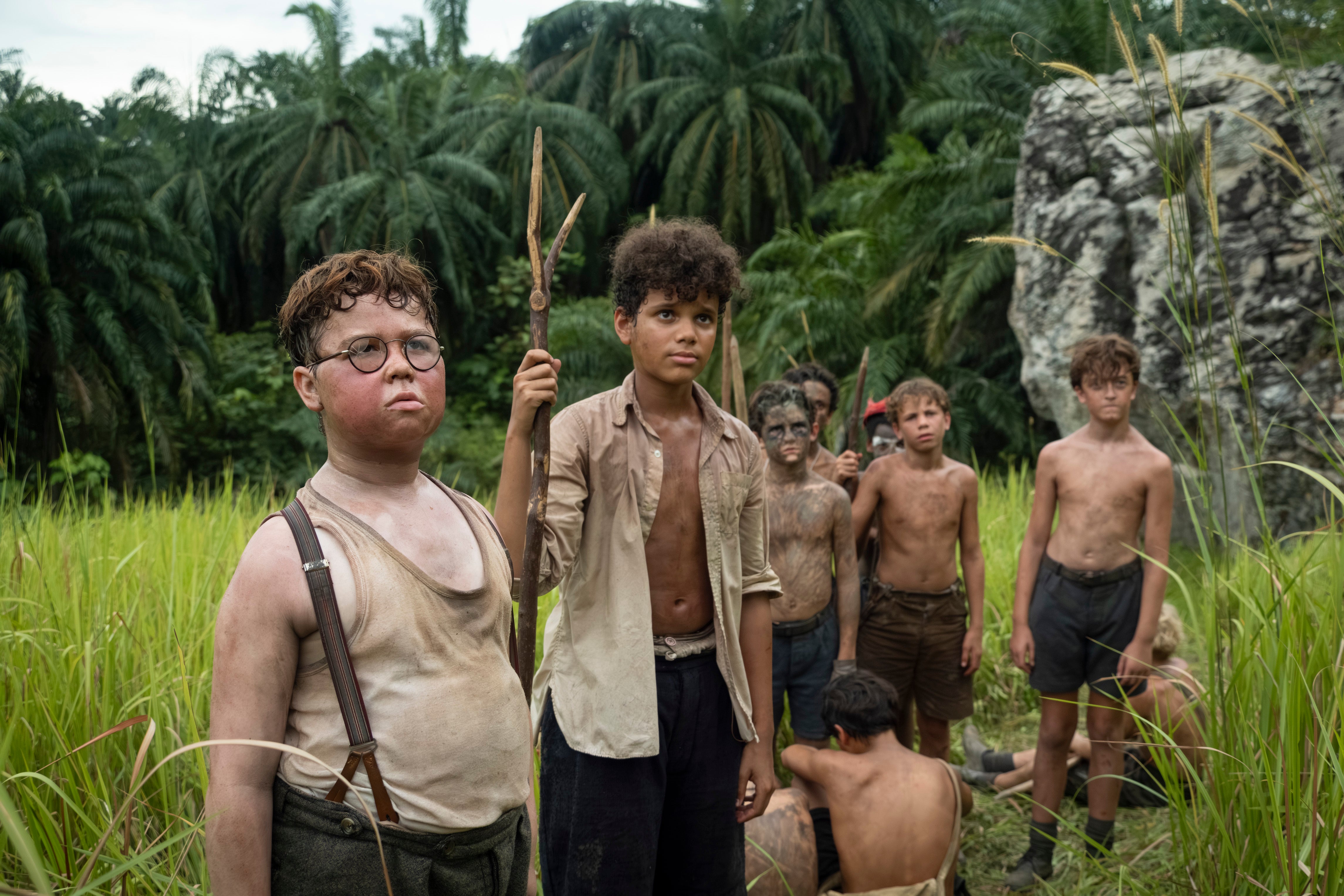
It's been almost 30 years since I read Lord of the Flies. I remembered the broad strokes, the conch shell, Piggy, the tribes, but not many of the finer details. Revisiting the story through the BBC adaptation was almost like experiencing it for the first time.
Visually, it's stunning at least to start. The cinematography is gorgeous, with vibrant tropical colors that practically leap off the screen. Every beach, jungle, and sunset looks postcard-worthy. Almost to a fault, the satisfying is cranked way up which works in some parts, but is distracting in others. The score is equally memorable, unsettling in a way that reminded me of those early Universal monster movies, where something always feels slightly off even when nothing overtly horrific is happening. It's experimental and minimal in the best ways.
Then there's the fisheye lens. For nearly the first forty minutes it's everywhere, warping faces and landscapes until it becomes distracting. It's the first sign that this adaptation is determined to make some very bold stylistic choices, whether they serve the story or not.
Episode two is where the series really finds its footing. As rules begin to erode, the boys slowly fracture into competing visions of civilization. One group clings to order, reason, and cooperation. The other embraces hunting, dominance, and fear. Reading the novel as a kid, those themes mostly flew over my head. Watching it now, they feel almost painfully relevant. Golding wasn't simply writing about children stranded on an island. He was writing about how fragile society really is, how quickly institutions collapse when fear, tribalism, and charismatic leaders replace reason.
The formation of the hunters' camp drives that point home. The psychedelic visuals, saturated colors, distorted edges, and pounding soundtrack are clearly meant to represent their descent into savagery. It's not exactly subtle, but it is effective. It was uncalled for in episode one.
The casting also deserves praise, particularly Lox Pratt as Jack. He's given plenty of room to chew the scenery, and it works. Jack's arrogance, cruelty, and growing lust for power make him genuinely unsettling. It's easy to see why the other boys follow him, even when every decision pulls them further into barbarism. Pratt walks the line between bully and cult leader remarkably well, creating a villain that's equal parts infuriating and fascinating.
Unfortunately, the direction keeps getting in its own way. By the third episode the visual experimentation becomes overwhelming. The oversaturated colors, heavy filters, strange framing, and horror-inspired camera work often distract from the emotional weight of the story. Simon's death should be one of the most devastating moments in the narrative, but the barrage of stylistic flourishes dulls its impact. At times it feels less like Lord of the Flies and more like a film school exercise determined to prove how artistic it can be.
The final episode doubles down on those choices. Large stretches feel like something out of Evil Dead, which is certainly... a direction. Ironically, when the adaptation reaches Piggy's death, arguably the novel's defining moment, it suddenly becomes restrained. After all the visual excess leading up to it, the scene lands with less force than the rock used to bash Piggy. The subsequent hunt for Ralph and the arrival of rescue move quickly, wrapping up the story as the island burns around them. It's an ending that still carries tremendous power because Golding's ideas remain timeless.
Lord of the Flies has become so embedded in popular culture that it's easy to forget what made it a classic in the first place. At its heart, it's a story about the fragility of civilization, the corrupting influence of power, and the uncomfortable truth that humanity's greatest monsters don't come from outside us. They come from within.
The destruction of the conch isn't simply the breaking of a shell. It's the death of law, order, and shared responsibility. Piggy's death isn't just the loss of a character. It's the death of reason and innocence itself. Those themes arguably resonate even more today than they did when William Golding first published the novel. The BBC adaptation captures that core remarkably well, even if its relentless stylistic experimentation often undermines the emotional moments it should have trusted to stand on their own. It's a beautiful production, an ambitious one, but one that occasionally mistakes visual flair for storytelling.
Same vibe
Related Revs
_poster.jpg)
Same desk
-1.jpeg)