Staff review
Daredevil: Unusual Suspects
7
Staff write-up
The Rev
A super team of Bendis and Alex Ross doing the covers? Giddy up!
Marvel Knights books exist adjacent to the main Marvel universe without feeling strangled by continuity. They take the broad lore strokes everybody already knows, do a refresher on the status quo, then move into a more self-contained story. Similar to DC Black Label. I dig the philosophy, the results are sometimes mixed.
The first arc, “Ninja,” is mostly all setup. We re-establish Matt Murdock’s world before introducing a new ninja faction that somehow seems to know him better than anyone has the right to. Bendis leans hard into paranoia early. Matt’s heightened senses, normally his greatest advantage, suddenly feel unreliable. People know too much. Events stop lining up cleanly. There’s this constant feeling that somebody is two steps ahead of him at all times. That atmosphere is where the book works best. But it's lost too quickly.
The middle portion shifts heavily into courtroom drama and character work, which is where Bendis tends to thrive. The Kingpin seemingly dies in an explosion, only for the rug to get yanked out immediately when it’s revealed he survived (but was ironically blinded in the blast). Fisk, a man who built an empire through power and control, suddenly forced into Matt Murdock’s world of darkness. That’s the kind of thematic symmetry comics should lean into more often. But again, it's dropped before anything interesting is done with it.
Things spiral further when Fisk essentially blackmails Nelson & Murdock into representing him legally, threatening to expose Matt’s identity if they refuse. That setup is great because it gets to the core of Daredevil as a character. Matt’s life is always collapsing inward. The superhero side contaminates the human side. The legal side compromises the moral side. There’s never separation for Matt, his world is constantly leaking.
Bendis also clearly understands that Daredevil stories are at their best when they treat New York like a living organism. The book constantly raises questions about collateral damage, legal responsibility, and public perception. One of the strongest threads involves a civilian suing Daredevil for property destruction. It sounds small compared to ninjas and Kingpin conspiracies, but it’s actually the most interesting idea in the book. But why go after DD and not the villain? Where’s the line between heroism and recklessness? The problem is, again, the payoff never earns the buildup.
Once the mystery starts unraveling, things get lazy. Multiple Daredevils appear. The Ringmaster enters the picture manipulating memories. Peter Parker impersonates Daredevil. A guy named Hillman suddenly becomes important. Plot threads that felt grounded in psychological tension turn into smoke-and-mirror comic book swerves. Instead of tightening the noose around Matt, everything is washed away with “magic hypnosis did it.”
It's frustrating.
You can feel Bendis reaching toward bigger themes about identity, perception, and self-destruction, but the story never digs deep enough to fully land them. The courtroom material, the moral conflicts, all are compelling. Watching Matt represent people he despises while simultaneously losing control of his own life is compelling. But every time the story threatens to become truly great, it pivots back into a quick wrap up.
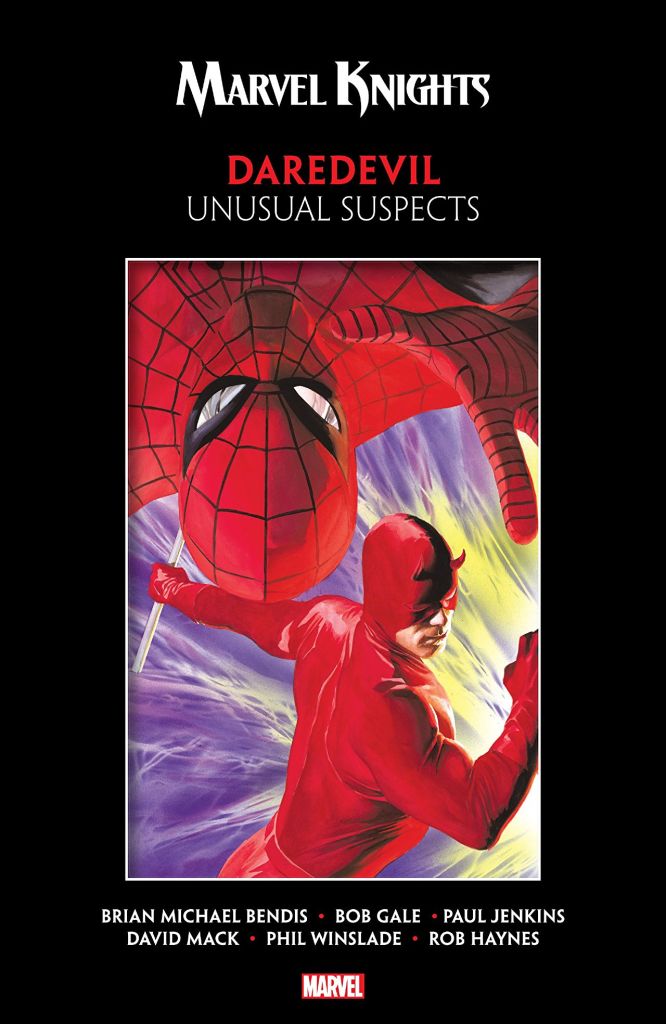
Even visually, the contrast is interesting. Alex Ross’ covers sell this as some monumental street-level epic while the interior art keeps things grimy and grounded. It wants to feel like a massive and definitive event, but really works best in its smaller, character-driven moments. It sniffs Civil War level of responsibility, but cowardly retreats at every opportunity to dive deeper.
Overall, Unusual Suspects is a good Daredevil story with flashes of greatness buried inside it. The noir atmosphere, legal tension, and paranoia carry the book for long stretches, but the final act collapses under overly convenient twists and rushed resolutions. There’s still plenty to enjoy, especially if you like street-level Marvel, but it leaves you feeling like there was a stronger story trapped just beneath the surface.
Same vibe
Related Revs
-1.jpeg)
-1.jpeg)
.jpeg)
.jpeg)
Same desk
-1.jpeg)